Project in development · 17 October 2026
Learning at the museum
Sharing water, following a translation or talking about a shared heritage. Three proposals for learning history with other people, inside and outside the museum.
Learning to look beyond prejudice
The programmes will help participants distinguish a source from a stereotype and listen to different interpretations of a shared past. They will address Islamophobia and other cultural and religious prejudices through documented histories, questions and conversation. The aim is to help each participant recognise generalisations and approach others with greater knowledge and respect.
Activities will be evaluated with teachers and participants: what they have understood, how they explain their ideas and which questions they take away. The findings will help improve the programmes.
Water and agreements
First experience to develop
Proposed programme · not yet open to participants
- Who it is for
- Pupils aged 12 to 16 and their teachers.
- What participants learn
- Understand how water reaches crops and agree how to share it when there is not enough for everyone.
- Who prepares it
- A school, a museum education lead and a specialist in the history of irrigation. Team to be appointed.
- How we will assess it
- Compare answers before and after the activity. Listen to how the group explains its decisions and identify barriers to participation.
One text, several languages
Proposal for a later stage
Proposed programme · not yet open to participants
- Who it is for
- Language and history students and their teachers.
- What participants learn
- Follow a translation and discover how a translator’s choices affect what a reader understands.
- Who prepares it
- Specialists in the history of translation, teachers and mediators.
- How we will assess it
- Compare versions of a text and explain decisions, using materials suited to each level.
Conversations about a shared heritage
Proposal for a later stage
Proposed programme · not yet open to participants
- Who it is for
- Cultural professionals, researchers and communities connected with the heritage.
- What participants learn
- Understand why the same inheritance can mean different things to those who receive it.
- Who prepares it
- A host cultural institution, a moderator and participants with documented work on the subject.
- How we will assess it
- Create an educational resource reviewed by the participants and agree what work can continue.
Six areas for the visit
Visitors can choose how to follow the experience: observing, listening, reading or handling objects. The design will include alternatives to projections and loud sound.
01Astronomy
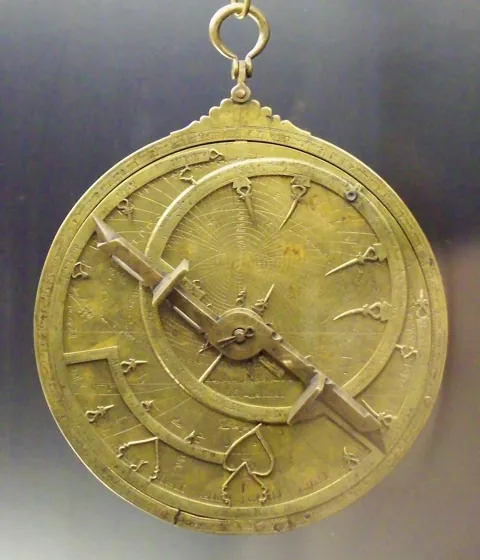
How do you calculate a star's altitude?
A replica astrolabe and a projected sky will make it possible to follow an observation step by step and learn how these instruments were used.
02Languages and translation
What happens when a book moves from one language to another?
An interactive table will let visitors follow a text's journey and listen to its different versions, discovering the work of its translators and commentators.
03Gardens
Why does a courtyard feel cooler?
Visitors will be able to change the shade, water and planting in a projected garden and observe the effects. The experience will connect design choices with familiar sensations.
04Water and farming
How do you get water to a field?
An irrigation model will allow visitors to open sluice gates and choose the water's course. The surrounding landscape will show the consequences of each choice.
05Music
What do we hear when we play together?
Hands-on instruments and spatial sound will let visitors explore rhythms and hear how a composition changes when another person joins in.
06Geometry and craft
How is a pattern made?
By turning and repeating shapes, visitors will build a composition that grows across a projection. The workshop will relate this exercise to the work of craftspeople.